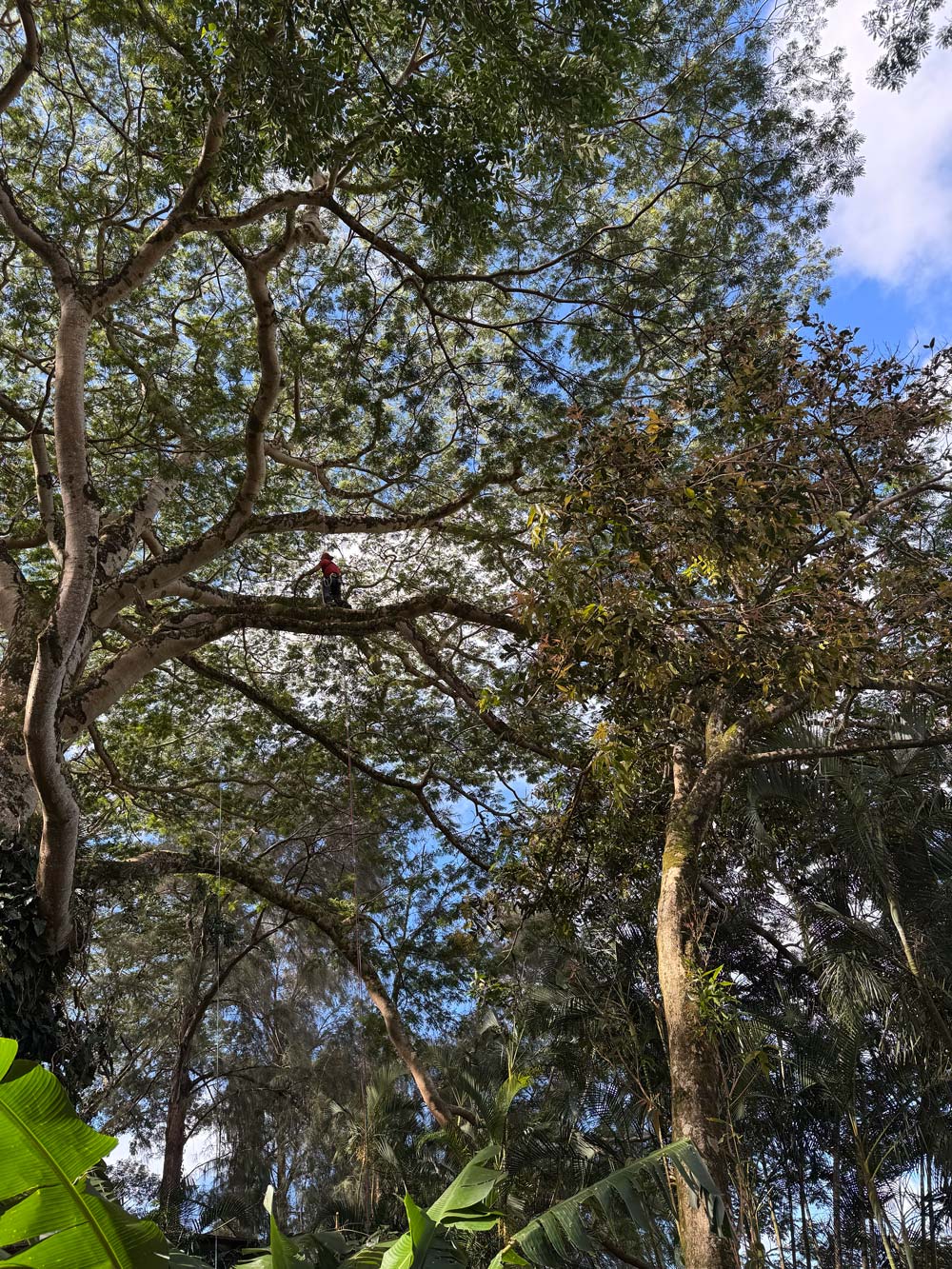
Some trees grow fast, provide quick shade, and seem like a good idea… until they take over. Albizia trees (Falcataria moluccana) is one of those trees. Once introduced to Hawaiʻi for erosion control, it’s now labeled a high-risk invasive species by state officials, land managers, and conservationists alike.
In this post, we’ll walk through what albizia trees are, why they’re a problem, how to identify them, and what you can do if one is growing on your property.
What Is The Albizia Tree, and Why Is It a Problem?
Albizia is a fast-growing, broad-canopied tree native to Indonesia and Papua New Guinea. In Hawaiʻi, it was originally planted to stabilize soil. But it didn’t stay put.
Today, it’s known as one of the most aggressive invasive species in the islands—especially across Oʻahu, the Big Island, and parts of Kauaʻi and Maui.
According to Hawaiʻi’s Department of Land and Natural Resources (DLNR), albizia:
- Grows extremely fast—up to 15 feet per year
- Outcompetes native trees, shading out important species like ʻōhiʻa
- Alters soil chemistry, favoring invasive plants underneath
- Drops large limbs without warning, even in mild weather
- Poses a serious risk to homes, roads, and power lines
DLNR: Albizia Profile – Do Not Plant
How to Identify an Albizia Tree
Albizia is easy to spot if you know what to look for:
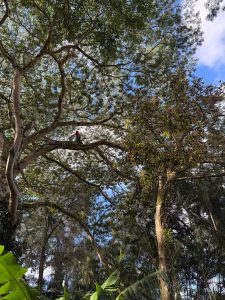
- Massive height (can exceed 100 feet)
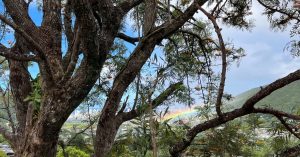
- Broad, flat canopy like an umbrella
- Delicate, feathery leaves
- Smooth, pale gray bark
- Often found along roadsides, abandoned lots, and forest edges
It’s sometimes confused with monkeypod trees, but albizia grows faster and has weaker, more brittle wood.

Why Removal Is Often the Best Option
Because albizia spreads quickly and collapses unpredictably, it presents a liability on both public and private land. In fact, some counties allow neighbors to report and request removal of albizia trees that pose a hazard to surrounding properties.
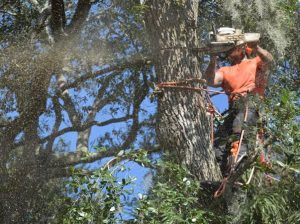
At Mo’ Bettah Tree Services, we’ve removed albizia from cliffside lots, urban streets, farms, and coastal areas. With ISA Certified Arborist oversight and crane-assisted equipment when needed, we make the process safe, respectful, and efficient.
Learn more about our Tree Removal services
Want to Be Sure? Ask a Certified Arborist
If you’re unsure whether you’re dealing with albizia, or are worried about a tree leaning over your roof or property line, we offer professional tree inspections and risk assessments.
Our certified arborist can identify species, assess structural safety, and help you create a plan for removal or long-term management.
Schedule an Arborist Consultation
What Should I Plant Instead?
Removing an albizia tree opens up space—and you don’t want to replace it with another fast-growing invader. Thankfully, there are many trees that provide shade and beauty without destroying ecosystems or endangering homes.
The experts at Plant Pono recommend a variety of safe alternatives depending on your needs. These include native species and well-behaved non-natives.
View Recommended Alternatives on Plant Pono
Need Help With Albizia? Call Mo’ Bettah Tree Services
If you have an albizia tree near your home, or just want peace of mind, Mo’ Bettah Tree Services is here to help. With over 15 years of experience and certified arborist expertise, we remove invasive trees safely and help property owners make the best decision for their land, their neighbors, and their future. Contact us today to schedule your inspection or get a free quote.